Category Archives: Architecture

Design Diary: Sleek Cabin on Squam Lake by Tom Murdough

Last fall I wrote about a beautiful lake house in New Hampshire designed by Boston-based architect Tom Murdough for his extended family. The article, “Doing Wright,” appeared in the Fall 2011 issue of Boston Home Magazine. A blog post is long overdue; summer is the perfect time for it.

It’s a guest house just through the woods from his parent’s modernist home on Squam Lake, where Murdough and his three brothers spent their boyhood summers. The design is meant to immerse the family in the woods and help them engage with the surroundings. The transitions between indoors and out are seamless, with sliding doors opening to decks flush with the floors, expanses of glass,  and wood ceilings that run straight through on either side of the windows.

Murdough talks about various “stations” within the compound—the guest house and main house, each with multiple decks, a boat house, two docks on the lake , tennis court, and sport court—connected by paths. He says of the overall site plan, “Conceptually the idea is to encourage movement between the points.”

The house, as seen from the lake. The standing seam copper roof gleams in the sunlight.
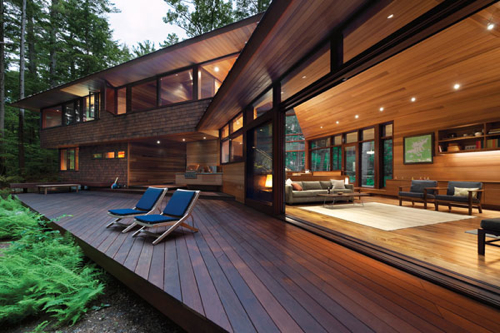
People on decks from each house can see each other – or stand back for privacy. The kink creates a cozy area. Lounge chairs from Didriks.
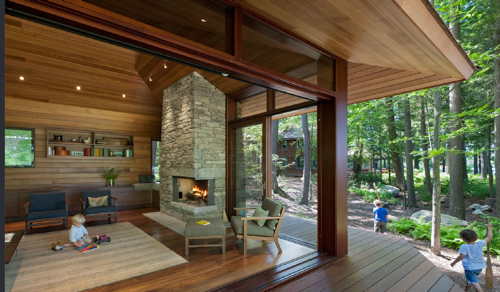
Walls of glass put nature front and center, but do so quietly, because instead of clear cutting, most trees were left standing in order to offer a veiled, almost mysterious, view of the lake. The wood ceilings that run from the interior out to the exterior create a pavilion-like effect when the sliders are open.
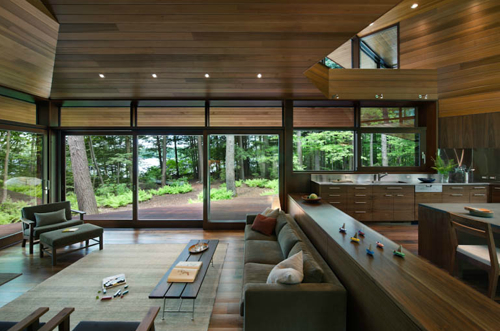
Murdough designed the coffee table using a three planks of walnut cut from a single, larger piece, so the grains match up.  The  custom lounge is by Andy McSheffrey of Wood Design New Hampshire.

The floors and built-ins are American black walnut and the walls and ceiling are western red cedar.  George Nakashima chairs from Addo Novo.
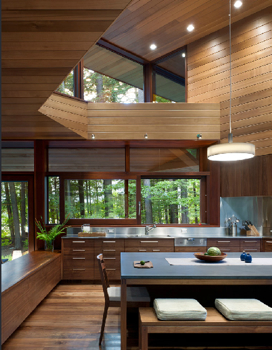
A stainless steel backsplash and counter set off the walnut kitchen cabinets. The tabletop is Pietra Bedonia. The built-in bench that divides the living room and kitchen provides storage for rainy day games and extra seating.  Vibia ‘Duplo’ pendant from Chimera.

The family eats all its meals at the kitchen island. The stair support is constructed from is powder coated steel; the treads and handrail are walnut.
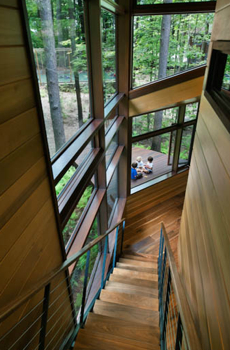
The narrow staircase with cable handrails is reminiscent of a ship’s gangway. Murdough says, “Descending, it’s a moment of quiet, before the openness of the main living space unfurls.”
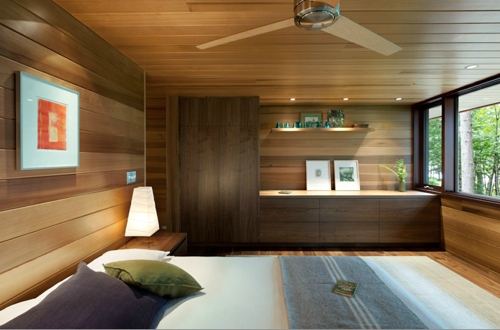
One of two master suites.  Minka Aire ‘Flyte’ ceiling fan in brushed nickel with tiger maple blades.
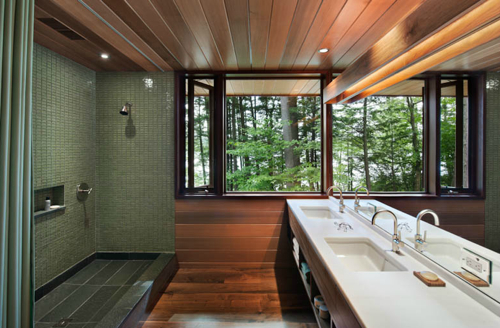
The expanse of mirror extends the view.
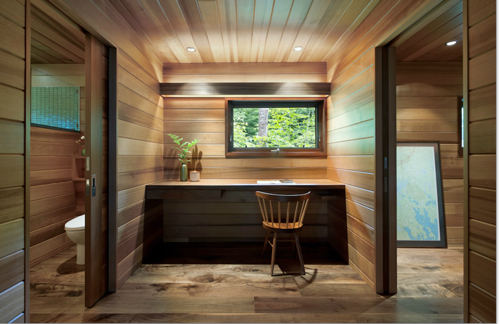
The enclosed built-in desk nook is a tiny sanctuary. The offset window offers a framed view of a slice of the treetop canopy.
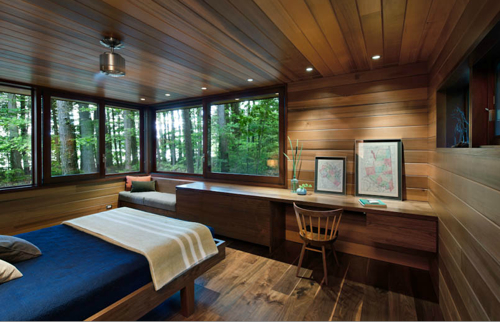
The house has lots of corner windows. Murdough says, “I like to break the corners of the building so you’re not looking through a conventional picture frame window.”

The kids’ bunk room. In addition to the bunk beds, there are three singles and a trundle.
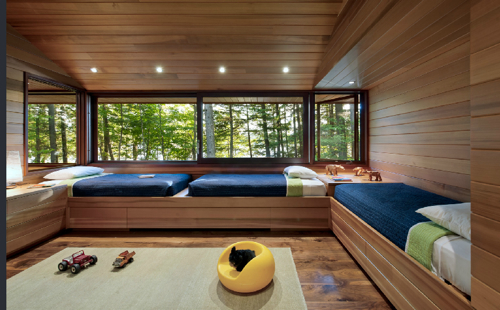
Architectural details are minimized, mimicking boat construction, for a streamlined, tidy appearance.
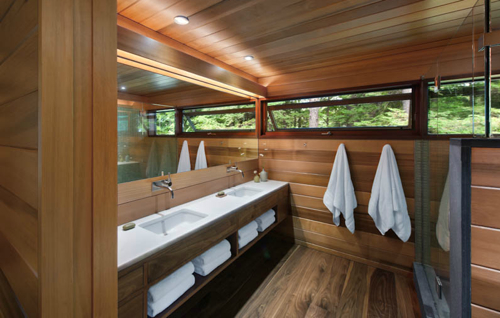
You can see a camp influence here.
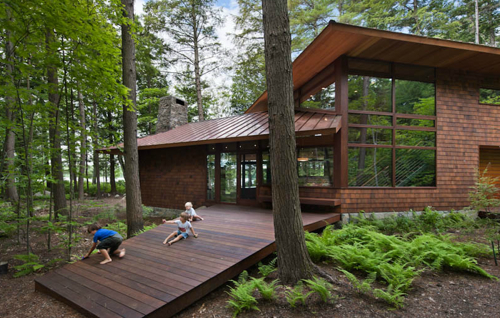
The ramp is the main entry. It provides a gentle transition from the wooded path from the main house, as well as the parking area, into the kitchen. You can’t actually drive a car up to the house; you’ve got to walk through the woods to get there.
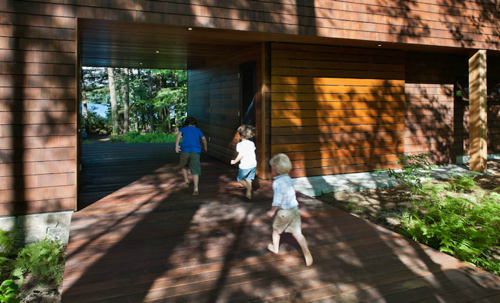
A breezeway, that can closed off with barn doors, cuts though the house. A master suite is off one side, partitioned off from the rest of the house.
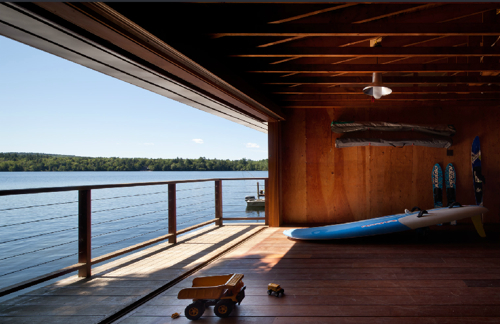
The boat house on the lake is also a play space for the kids on rainy days.

P H O T O S  BY  C H U CK  C H O I

4 Comments

Filed under . REGULAR FEATURES, Architecture, Design Diary, Rooms

City Scenes: Chicago Factories by David Harmantas

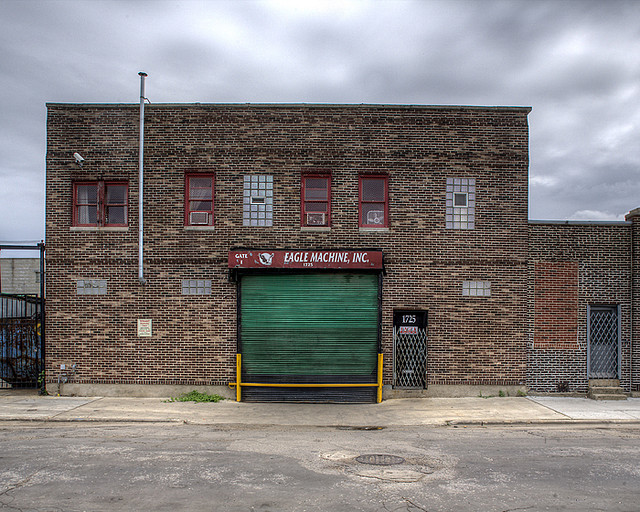
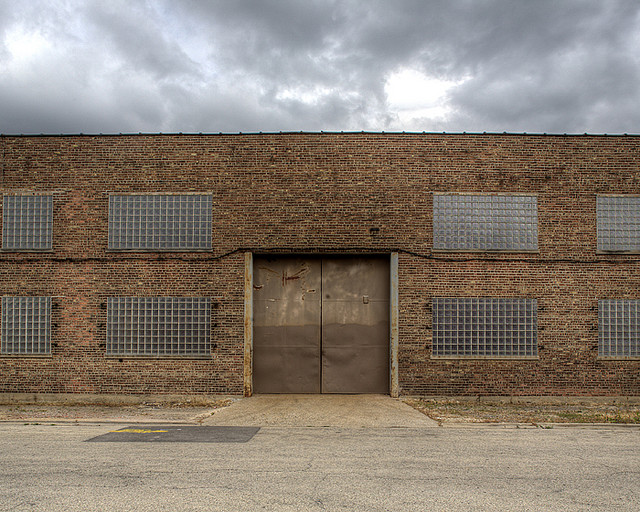
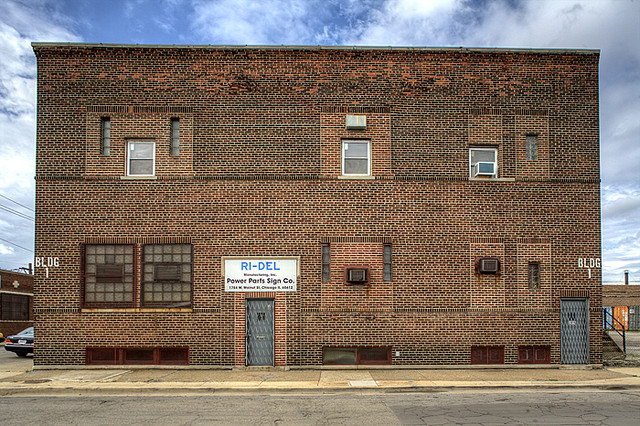
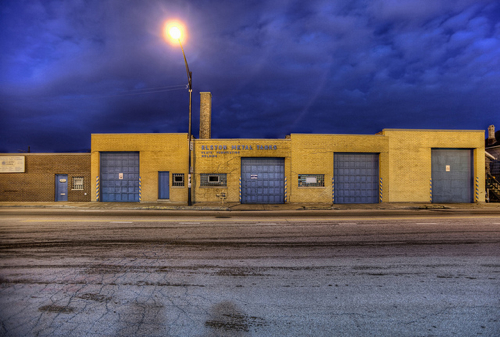
Over the weekend I put together a post for a Design Milk “Friday Five” column that features furniture designer Jason Lewis‘ inspirations. One of the Chicago-based designer’s pics is the U.S. Adhesives building in an industrial neighborhood near his studio. I was quite taken with the photograph and how it evokes the country’s industrial roots. The photographer, David Harmantas, posted the series, taken on Chicago’s Kinzie Street industrial corridor, on his blog, Inexorable Solitude: The Cycle the Ghost Round. There were also similar images on his Flickr photostream.

Photos by David Harmantas

2 Comments

Filed under Architecture, Art

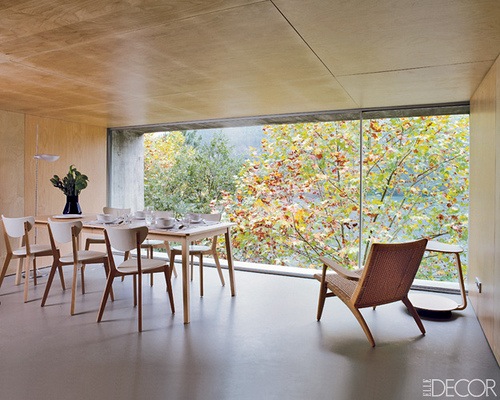
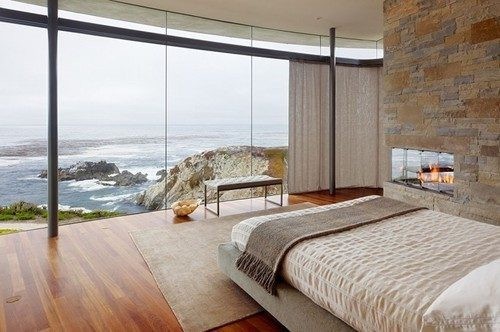
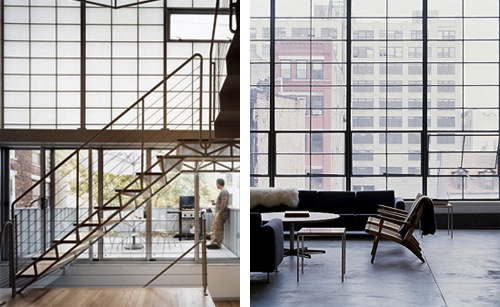
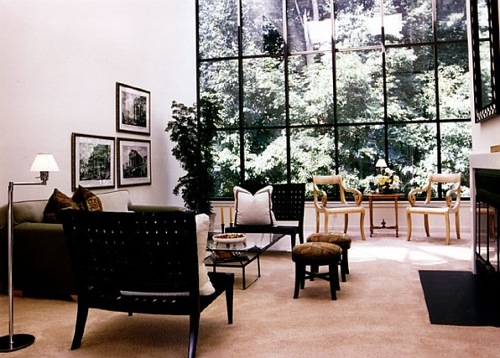
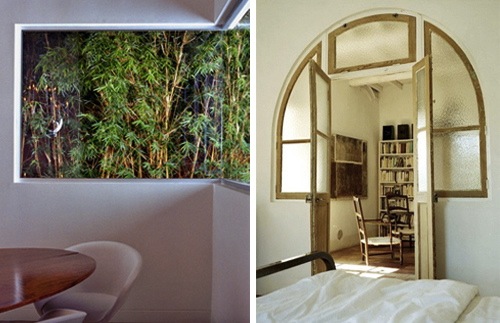
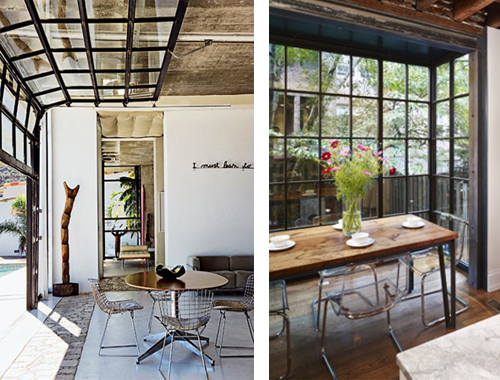
Montage: 53 Rooms with Spectacular Windows

With the weather moving towards spring, all I want to do is stare out the window, and wish I were outside, somewhere . . .

Photographer Alan Kaplanas

Elle Decor

Architects Kengo Kuma & Associates

via Habitual Bliss

via theBERRY

Hey Home

Meyer Davis Studio

Ken Linsteadt Architects

unidentified

Photographer Mark Williams

Aqua Vitae Design

via The Brick House   |   via The Aestate

Dwell Magazine   |   Fernlund + Logan Architects

California Home+Design

Diana Kellogg Architects

Photographer James Merrell

via Zillow, NYC   |   via I Need a Guide

Photographer Simon Watson

Photographer Gaelle le Boulicaut

John Douglas Eason Interiors

Fawn Galli

Photographer Ellen McDermott

Fernau & Hartman Architects

Lundberg Design

M. Design

Pretty Space   |   Lundberg Design

Spruce Design and Decor

via Etoile Legere   |   Walker-Warner Architects

Photographer Jason Martin

Home DSGN

Photographer Marc Gerritsen

via Kikette Interiors   |   via Cape Cod Islands & Home

Tim Clinch Photography   |   Hotel Iturregi, Spain

Photographer Simon Watson

photographer Lincoln Barbour

unidentified

via Inspace Locations

via Marie Claire Maison

via theBERRY

Delphine Krakoff, Pamplemousse Design

unidentified

Photographer Greg Segal   |   Photographer Julien Oppenheim

Shelton, Mindel & Assoc.   |  Fernlund + Logan Architects

via Automatism   |   via Houzz

4 Comments

Filed under . REGULAR FEATURES, Architecture, Montage, Rooms

Design Diary: The Saguaro Palm Springs

The Saguaro Palm Springs, brought to you by the developers of the Ace Hotel, opened last week, just in time for Modernism Week and well in time for those heading out for April music festival Coachella.

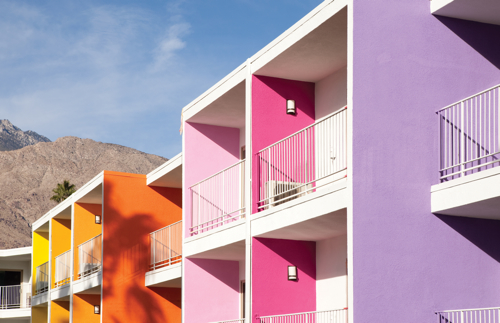
Designed by NYC-based Peter Stamberg & Paul Aferiat of Stamberg Aferiat Architecture, the hotel is a re-vamped a three-story Holiday Inn from 1977, re-imagined in serious Technicolor. The color palette reflects the vibrancy of the Southwest, in hues derived from 14 indigenous flowers of the Mojave Desert.

Guest rooms boast multicolored striped bedding, orange furniture, a bubble gum pink accent wall, and royal purple carpeting. A wood table and chairs and black and white images by Palm Springs photographer Jim Cornett ground the rooms with a bit of natural realism.

There are 245 rooms, a second floor public space with a wild red Bird-of-Paradise wallpaper on the ceiling, an expansive pool in a lush courtyard complete with a cabana pool bar, a spa, and two restaurants by Iron Chef Jose Garces, one with a tequila bar, the other with a wine bar.

The Saguro Palm Springs, 1800 East Palm Canyon Drive, Palm Springs, California.

1 Comment

Filed under . REGULAR FEATURES, Architecture, Design Diary, Rooms

Architecture: Martha’s Vineyard Campmeeting Association

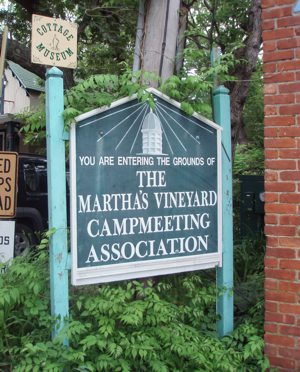
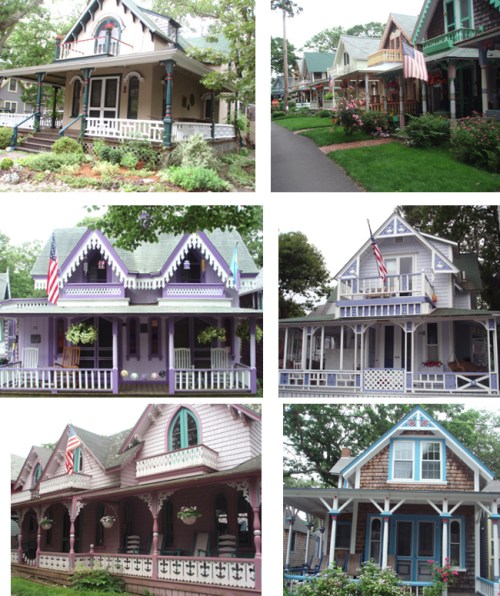
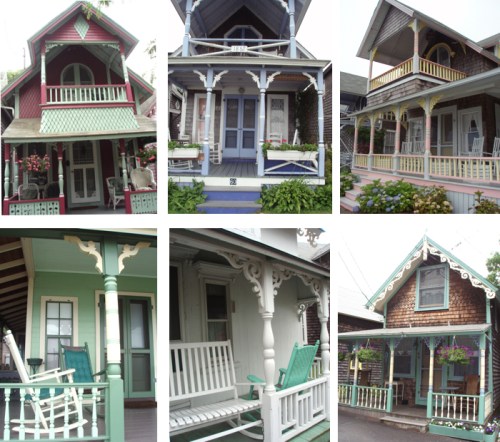
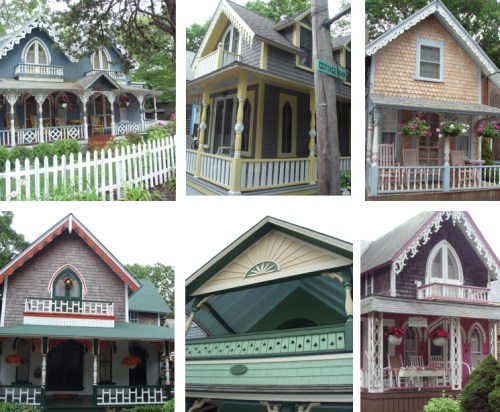
P1010156I don’t know much about Martha’s Vineyard. I went for the first time last year, to see a house for a Globe magazine piece. I had a few hours to walk around Edgartown (got a cute Michael Stars ombré dress), so it was fun. Not long after, I went back for story for Cape Cod & Islands Home. This time it was in and out – I think I was on the island all of two hours. I ferried over again yesterday, for another piece for them. Again, a quickie, but I had two hours to kill in Oak Bluffs before my return crossing. After grabbing a sandwich and assessing the shops as tourist trap junk, I decided to wander. I happened upon this sign: The Martha’s Vineyard Campmeeting Association. Hmm. Looked like a little village; the houses were charming, all gingerbread cottages painted pretty colors, huddled together like, well, camp cabins. I took a ton of pictures (unfortunately it wasn’t sunny, so the colors don’t shine), and when I got home did some brief research.

According to the Martha’s Vineyard Campmeeting Association website, the enclave contains “the most perfectly preserved collection of Carpenter Gothic style architecture in the world.” How they came about is really quite interesting. The association is a non-profit religious organization that was established in 1835.

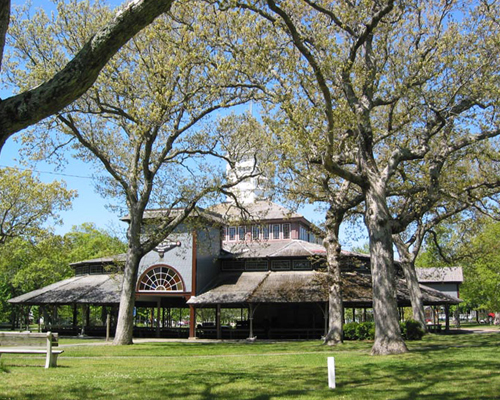
According to the MMVCA, from the first campmeeting in 1835 until 1859, ministers preached from a makeshift stand. In 1869, a huge tent was raised over Wesleyan Grove (a common area) to protect the congregation from the heat and rain. In 1879, the iron Tabernacle was built in Wesleyan Grove, which was restored and upgraded in 1999 by the architecture firm Durkee Brown.

tabPhoto courtesy of Durkee Brown Architects

Thousands attended the services. They were housed in large tents knows as “society tents.” Conditions were cramped, with men and women sleeping dormitory-style on opposite sides of a central canvas divider. Over time, families began leasing small lots on which to pitch their own individual tents. In the 1860s and 1870s, the family tents were rapidly replaced with permanent wooden cottages. At one time there were about 500 cottages; today there are just over 300.

The cottages are privately owned; many have been passed down through generations. Some are pristine, others are a bit ramshackle, but all are adorable. There are usually some available for rent – see the current listings here. The Tabernacle hosts all sorts of events, and interdenominational worship services are held there on summer Sunday mornings.

Here are my photos of the cottages:

mv-1

mv-3

mv-2-

3 Comments

Filed under Architecture